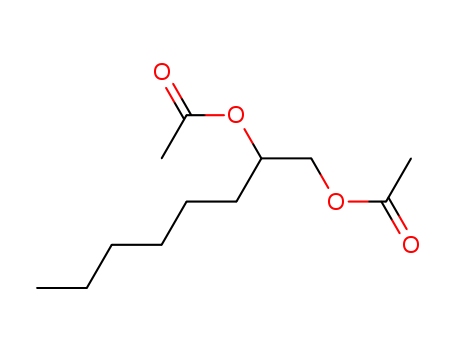
Factory supply 1,2-octanediyl diacetate 22007-56-3 with low price
- Molecular Formula: C12H22 O4
- Molecular Weight: 230.304
- Vapor Pressure: 0.0027mmHg at 25°C
- Boiling Point: 286.1°Cat760mmHg
- Flash Point: 130.7°C
- PSA: 52.60000
- Density: 0.984g/cm3
- LogP: 2.45160
1,2-octanediyl diacetate(Cas 22007-56-3) Usage
|
Physical state |
Clear, colorless liquid |
|
Odor |
Mild, sweet |
|
Solubility |
Soluble in most organic solvents |
|
Toxicity |
Low toxicity, generally regarded as safe for use in applications |
|
Potential health effects |
May cause irritation to the skin, eyes, and respiratory system in high concentrations or with prolonged exposure |
|
Industrial and commercial applications |
Wide range of uses in various industries and commercial products |
|
General Description |
1,2-octanediyl diacetate, also known as octylene glycol diacetate, is a chemical compound commonly used as a solvent or as a fragrance ingredient in various consumer products. It is a clear, colorless liquid with a mild, sweet odor and is soluble in most organic solvents. This chemical is typically used as a plasticizer in the production of polyvinyl chloride (PVC) and other polymers, as well as in the formulation of perfumes, colognes, and other personal care products. It is considered to have low toxicity and is generally regarded as safe for use in these applications. However, it may cause irritation to the skin, eyes, and respiratory system in high concentrations or with prolonged exposure. Overall, 1,2-octanediyl diacetate is a versatile chemical with a wide range of industrial and commercial applications. |
InChI:InChI=1/C12H22O4/c1-4-5-6-7-8-12(16-11(3)14)9-15-10(2)13/h12H,4-9H2,1-3H3
22007-56-3 Relevant articles
-
Javaid,K.A. et al.
, p. 3475 - 3479 (1970)
-
Method for preparing amino alcohol derivative
-
Paragraph 0093; 0094; 0095, (2018/11/22)
The invention provides a method for prep...
Vicinal Difunctionalization of Alkenes under Iodine(III) Catalysis involving Lewis Base Adducts
Aertker, Kristina,Rama, Raquel J.,Opalach, Julita,Mu?iz, Kilian
supporting information, p. 1290 - 1294 (2017/04/18)
The influence of a 2-pyridinyl substitue...
Mechanistically Driven Development of an Iron Catalyst for Selective Syn-Dihydroxylation of Alkenes with Aqueous Hydrogen Peroxide
Borrell, Margarida,Costas, Miquel
supporting information, p. 12821 - 12829 (2017/09/25)
Product release is the rate-determining ...
Aerobic Acetoxyhydroxylation of Alkenes Co-catalyzed by Organic Nitrite and Palladium
Chen, Xian-Min,Ning, Xiao-Shan,Kang, Yan-Biao
supporting information, p. 5368 - 5371 (2016/11/02)
An aerobic acetoxyhydroxylation of alken...
22007-56-3 Process route
-

-
629-05-0
n-octyne

-
-
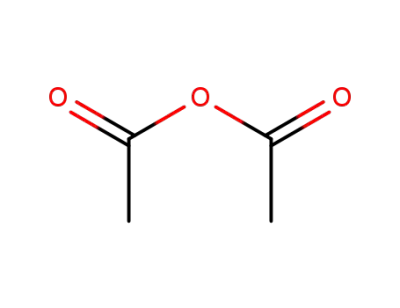
108-24-7
acetic anhydride

-

-
112-14-1
n-octyl acetate
-
-
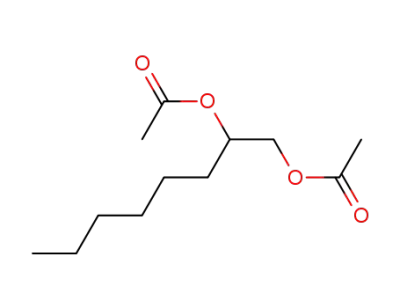
22007-56-3
1,2-octanediol diacetate
| Conditions | Yield |
|---|---|
|
Multistep reaction;
|
-
-
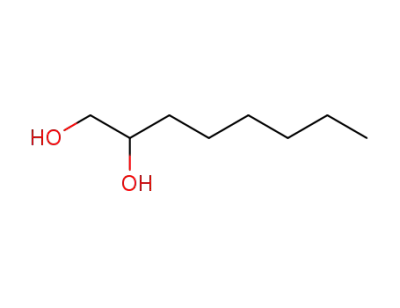
1117-86-8
1,2-octandiol
-
-
108-24-7
acetic anhydride
-
-
22007-56-3
1,2-octanediol diacetate
| Conditions | Yield |
|---|---|
|
In
acetic acid;
at 20 ℃;
for 12h;
|
99%
|
|
With
dmap; triethylamine;
In
dichloromethane;
at 20 ℃;
for 16h;
Cooling with ice;
|
76%
|
|
With
sodium acetate;
In
benzene;
|
|
|
With
pyridine;
|
|
|
In
acetic acid;
for 12h;
|
22007-56-3 Upstream products
-
111-66-0

oct-1-ene
-
546-67-8
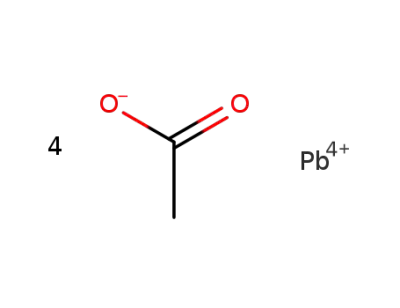
lead(IV) tetraacetate
-
1117-86-8
1,2-octandiol
-
108-24-7
acetic anhydride